
Why Multiple Perspectives Matter in Storytelling

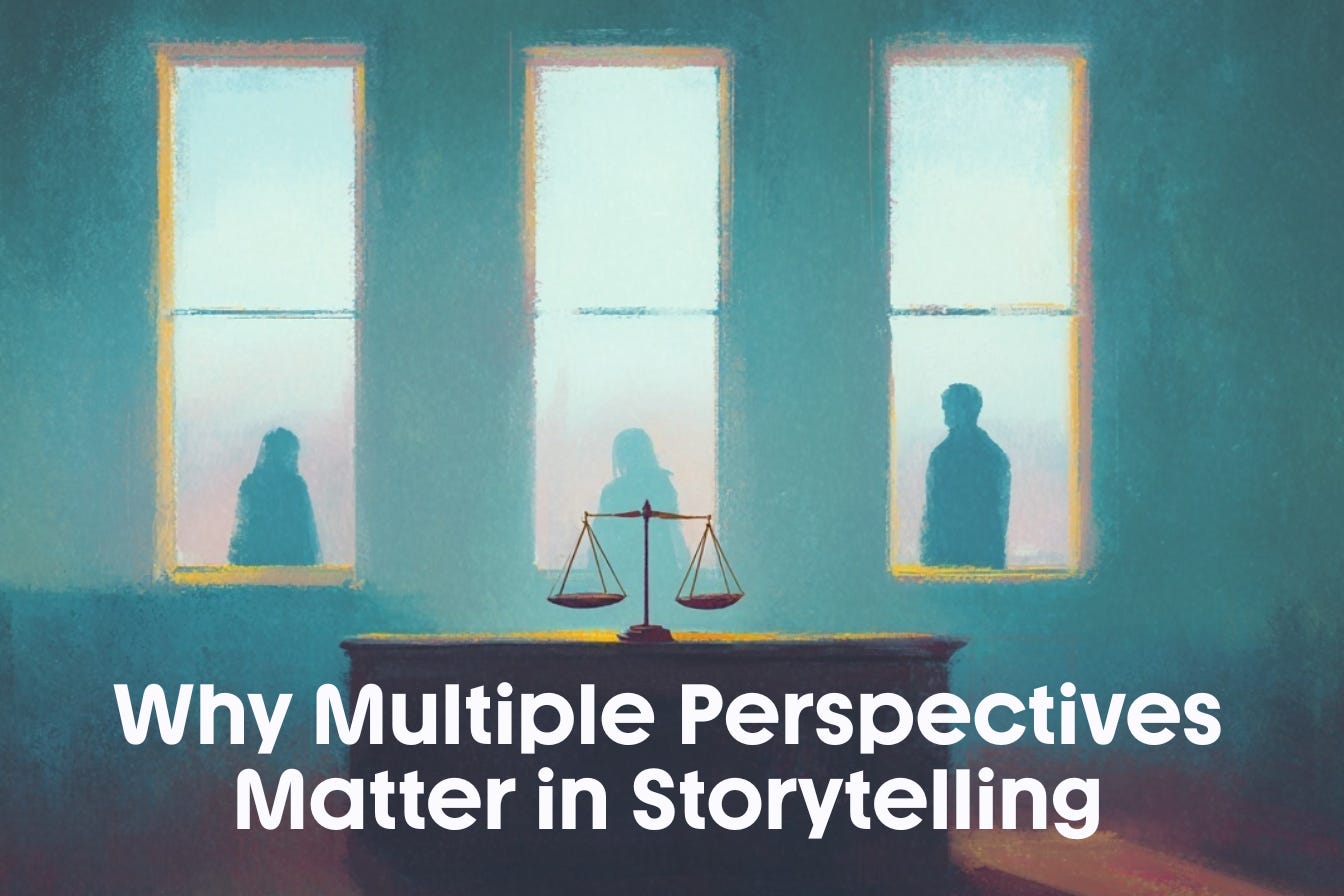
In this follow-up essay, Dr. James Ogsbury discusses how having 3 perspectives shaped the book’s creation and made it possible.
During and after the events in my book About Not Losing, Peter Pryor (my lawyer) discussed plans with me and, presumably to keep me out of his hair, raised the possibility that I write about my experience as a defendant during the trial. Obviously, given that I have neither experience nor expertise as a writer, I was leery about the idea. As it turns out, multiple perspectives would be both valuable and important to bringing About Not Losing to life.
However, Peter reported that he keeps a diary during trials and would be willing to include it as a second voice in this trial. He also suggested that I talk to Dr. Fran Berman, the Native American PhD team psychologist, about her role in supporting me during the upcoming trial. At our first meeting, I surprised Dr. Berman with the idea of writing about my experience participating in a large trial. Because I knew that she had taken notes while training Peter how to face Mr. Spence and continued her diary during the first trial. I asked Dr. Berman if she would be willing to assist me with the project from her perspective.
She initially tried to dissuade me from writing about the trial, stating there is nothing more droll than writing about a trial. But, when she realized that my reason for writing about the trial was to document a defense of medicine, an issue about which I felt strongly, and that this was not to be primarily a personal malpractice defense, she kindly agreed to become the third voice during the trials. Her notes from our initial encounter described her thoughts. She wrote, “Jay’s story has nothing to do with the material world we innocently think is on the line for a physician being sued. It is not about winning, it is about not losing. From those words came the title of the book.
Our philosophies became interrelated as we documented the issues faced during the trial. I certainly discussed complex medical issues with Peter, and he discussed legal strategy with me. Dr. Berman’s role had included training Peter on how to face a brilliant Native American warrior-attorney. The training, which allowed Peter to move confidently forward, opposing his notable adversary, continued during the trial, and I noticed that Peter soon began to think and talk in Native American homilies. In addition, one of Dr. Berman’s other main roles was to ready me for the onslaught that was inevitably to come.
During our meetings, she frequently used Native American philosophies to explain her ideas about the support she felt I would need to remain strong during the trial. I’m sure she had utilized similar ideas with Peter.
While we never shared the specific words each of us was writing, we frequently shared ideas that led to useful trial strategies. We also shared the joint intuition that we not only had a responsibility to provide an accurate and thorough defense of the medicine in question, but also to write about it in a way that was honest, accurate, and personal. We all agreed that writing an accurate description of the trial led to a better defense.
I also believe that each of the three of us being willing to individually write about the trial from each of our different perspectives led to a better understanding of the strategy and dynamics of the trial, to a better recognition of the multiple people who were involved in the trial, and thereby to a better written description of the trial. Some three years after the trial, the three of us met in the mountains to discuss the completion of the manuscript. We finally talked about what each of us had written and the roles we had taken.
Peter was not available to be involved in describing the recurrent dream I had for 30 years, so I turned to another legal colleague, who wrote an absolutely stunning dream completion of the trial. Then, of course, Fran described what I might have felt had I been present during the dream trial, and Native American philosophy again played a significant role, this time in the story’s final part. The three voices once again were heard, and without the medical, legal, and Native American involvement, the dream sequence, and probably the actual manuscript, would not have been completed.
Most books are written primarily by one author, though occasionally with a ghostwriter. In our case, the presence of three interrelated voices had several significant benefits. First, and very simply, I might not have had the courage to embark on the project without my two colleagues. More importantly, although we did not discuss our writing during the trial, our interrelated philosophies from three different perspectives clearly helped create Peter Pryor’s brilliant defense. This led to a favorable legal result.
The presence of the three philosophies led to a better understanding of the interpersonal relationships among all those present. But most of all, the presence of those three intertwined voices led to the wonderfully complex description of the events surrounding the malpractice trials of 1989 1990.