
Rediscovery after Crisis
Finding Purpose Post-trial

It is clear to me now that the character known as Jay no longer exists. Before 1986, he had a passion for medicine that was a central focus of his being. When his medicine was challenged, his very essence was challenged, and the defense became the passion. — But now with the trial over and the manuscript completed, the passion, and with it the love of medicine, is gone. I considered retirement at one point, but, like most people, I am ill-equipped for any field except medicine. Indeed, several colleagues who have tried retirement – and failed – advised against that plan. So, I have joined, without bitterness, the growing group of physicians who look to medicine as a vocation, a job, not an avocation. Our years of training provide the discipline to do the job still well, and experience has produced the wisdom to recognize and avoid the medical situations that involve risks we no longer wish to take.
Those words were written in January 1993, when Dr. Fran Berman, Mr. Peter Pryor, and I met in the mountains to complete the project of describing our collective experience during the high-stakes malpractice trial, which led to the manuscript that became “About Not Losing.”
The experience changed each of us.
Dr. Berman, the Native American PhD team psychologist, had what were probably the most essential roles in the trial. Her role included serving as the jury selector, then spending six months training Mr. Pryor on how to face a brilliant Native American warrior plaintiff’s attorney, and finally attempting to prepare me to survive the trial. During the trial, Dr. Berman appeared to rediscover her identity as Snapping Turtle, which, as she wrote about her childhood, was “for the most part outside of my awareness.”
Peter was an extraordinary attorney throughout, formulating a brilliant malpractice defense. But he also appeared to be remarkably passionate personally. He was the emissary who attempted to arrange an honorable settlement for the family. This settlement was waylaid by the filing of the lawsuit by the patient’s Native American husband and his Native American attorney. Because of this, I have always believed that he was a kind of secondary defendant in the trial.
And I, as the defendant in a trial which superficially was successful with only a small settlement given to an Indian tribe as a face-saving measure, had to look at myself to determine a reasonable future.
As the words indicated, my initial plan was to return to medicine, perhaps practicing neurosurgery on a somewhat more limited basis, particularly one that avoided risks that might lead to another such event. However, when I looked back on my life almost exactly 30 years later in January 2023, I realized that my initial post-trial plan to return to a modified neurosurgical practice simply did not work.
I wrote the following in the trial:
I continue to practice within the field of neurosurgery. Not surprisingly, the passion for medicine never returned. I was left searching for something – anything – to fill this void. Initially, the passion was replaced by a significant concern to avoid taking a risk that might lead to a similar situation. Because of this, the joy and fulfillment that comes from neurosurgical practice also never returned. Finally, in 2006, after sustaining a broken hip on a bike ride, I decided not to return to surgery, and for some years functioned as a neurosurgical consultant.
However, even during this time, I realized that facing patients primarily with a concern for self-protection was simply not ethically acceptable, and I finally retired fully from patient care in November 2022.
During this time, in the absence of time spent in the operating room, I became interested in healthcare reform.
I studied the various healthcare systems, including regular healthcare, as well as the Colorado State Workers’ Compensation Medical Care delivery system.
I came to realize that there was a significant structural difference between the two. Regular healthcare, by its nature, is primarily cost-driven. However, to my initial surprise, the Colorado work compensation system is actually outcome-driven.
I quickly discovered the reason for this striking phenomenon: in the workers’ compensation system, which was semi-privatized in 1994, in addition to healthcare costs, the company is required to pay indemnity costs after care is completed.
Those costs measure any permanent functional loss suffered by the worker.
Of course, the indemnity costs are, in essence, an inverse measure of outcome; the worse the outcome, the higher the indemnity costs.
The company learned that investing in healthcare upfront would lower after-care indemnity costs and also learned to make crucial decisions based on indemnity costs, thus resulting in an outcome-based system.
With the knowledge of this unique workers’ compensation medical system in mind, a physiatrist colleague and I developed a computer-based program for treating acute low back pain, called the Colorado Low Back Collaborative. After three years of intensive development, with the addition of two other medical colleagues and extensive support from the wonderful local medical director of United Healthcare, the program was rolled out in January 2011 to significant national acclaim.
Unfortunately, after four months, the primary care physicians at the sponsoring hospital, for whom the program was developed, astoundingly decided that the $500 management fee, in addition to their usual fees, was not sufficient to justify the four minutes of extra time for data insertion at the time of the initial evaluation and the one minute extra at each follow-up evaluation, and elected to exit the program, causing its demise.
Obviously, we were all highly disappointed. I remain friends with the other four to this day.
Somewhat later, I was offered the opportunity to become a contract physician for a different insurance company. After several months, I was tasked with developing a program of spine care within the system.
Another physician and I created a process for reviewing surgical requests, based on guidelines that had been evaluated and supported by all the spine societies. Once the spine physicians realized that we were not eager to deny requests for appropriate surgical care but instead planned to address surgical requests strictly based on those guidelines, our program became popular with both the company and the spine community.
The company came to understand that quality care was probably the most cost-effective, and the physicians realized that all reasonable requests for their patients would be approved. Then, several years ago, after more than 13 years and more than 26,000 reviews, I was transferred to the appeals division within the company.
While that decision initially seemed reasonable, I came to find that the appeals program was under the direct supervision of a strict company physician, who herself was under the direct control of the company’s financial management.
I quickly began to realize that quality, as measured by the guidelines, was no longer the determining factor during the initial reviews, and I frequently had no choice but to overturn denials that had been previously made. Obviously, this was not a popular corporate stance to take, and after more than 13 years, my position as a contract physician with the company was terminated abruptly.
Of course, I was not given a reason for that decision. Still, I obviously surmise that my insistence on performing thorough reviews focusing on patient safety and outcome led to the elimination of my position.
This change was a significant disappointment, not that I needed the job, but because of the pride that I had taken in being a patient advocate in a company that clearly needed one. I remain friends with my colleagues from that company.
Finally, after my full retirement in the fall of 2022, I had time to look back on these many years.
I came to realize that each of the significant events, the trial and the defense of my medicine, the manuscript describing it, the Colorado Low Back Collaborative, and even the position as a consultant in the insurance company, was actually a substitute— a surrogate—for the passion for medicine that was lost to the trial. Like the passion for medicine, each of these surrogates failed in its own way.
Good News
The good news was that the newly found free time led to the opportunity to address a dream that I had experienced many times over the prior 30 years—a dream of completing the actual trial, which the appropriate medical-legal settlement had aborted.
I reconnected with Peter and Dr. Berman and spent the following year, starting in January 2023, describing the dream, which re-created the planned defense portion of the trial.
Of course, I needed extensive help with this project. A neurosurgeon has no business describing a legal event.
I was saved by a close friend, who was initially a litigator and then became involved in legal education. She took my framework of the defense case, which was based on my knowledge of Peter’s planned strategy, and wrote a stunning dream trial sequence.
Dr. Berman kindly added her ideas as to what it would have meant to me had it happened the way it was written. And, in her usual perceptive way, she recognized that the completion of the manuscript, including the dream sequence, is probably the final surrogate.
Fortunately, since the manuscript was successfully published, this final surrogate has been highly rewarding.
What does all this mean?
As I wrote in the prologue of About Not Losing, doors frequently unexpectedly open for all of us, rarely at an opportune time, but my only suggestion is for one to walk through the newly opened door to see what is on the other side. That certainly happened to me.
The corollary to that idea is that doors also frequently close, but when one door closes, another almost inevitably opens, and one loses only if one fails to embrace the opportunity that is offered through the newly opened door. Fortunately, I have been able to recognize those newly opened doors.
Because of this journey, which included the tragic healthcare leading to the trial and ultimately resulted in a manuscript describing both the actual trial and the dream of completing it, I have been able to reconnect with many long-lost friends.
The reconnection has been difficult for some of them, because they were actually directly, or at least superficially, involved in the activities of the medicine and the trial.
Even so, almost all of them wished to talk about their personal situations. They had their own experiences to describe, many of which were relevant to mine.
Because of this, I came to realize that understanding each of their experiences, and them personally, was possible. Without the medical tragedy and the subsequent trial, such an understanding would never have been possible, and each of us probably would have gone on and completed our less-than-interesting lives.
Only now do I understand that.
Next, while the memories of those in the trial, and now the excitement of rediscovering old relationships, are undoubtedly significant, even more important is the recognition of personal growth and of the development of a new identity that has come from the total experience.
While a life performing the excellent techniques now available to the modern neurosurgeon would undoubtedly have been satisfying and, hopefully, incredibly beneficial to patients, even so, and more importantly, I would likely have been confined by the silos that medicine now seems eager to create.
Without this containment, and with the extraordinary personal experience I have had, I have been able to partake in the life of an inadvertent author. I was thus able to share personal experiences and understand the philosophies of many others, both in the literary world and outside of the trial circumstance.
Most of all, I have been extraordinarily privileged to share the lives and deeply held personal philosophies of two incredible colleagues.
Without Peter, I could never have hoped to have understood the joy that many attorneys feel in supporting their clients. Peter was indeed a brother.
And without Dr. Berman, I would never have learned about the complexity and beauty of Native American culture. I particularly would never have understood the depth of emotion from which the Native American experience has stemmed.
The final words of the manuscript summarize the essence of the manuscript, and describe the gratitude which I feel in being able to share the journey with them:
Therefore, now, there lives part of each of us— in the other of us, which comes from the understanding and appreciation of our differences. Each of us, even Peter from wherever he now resides, would hope that this rediscovery could be a model for others during difficult times.
About The Author
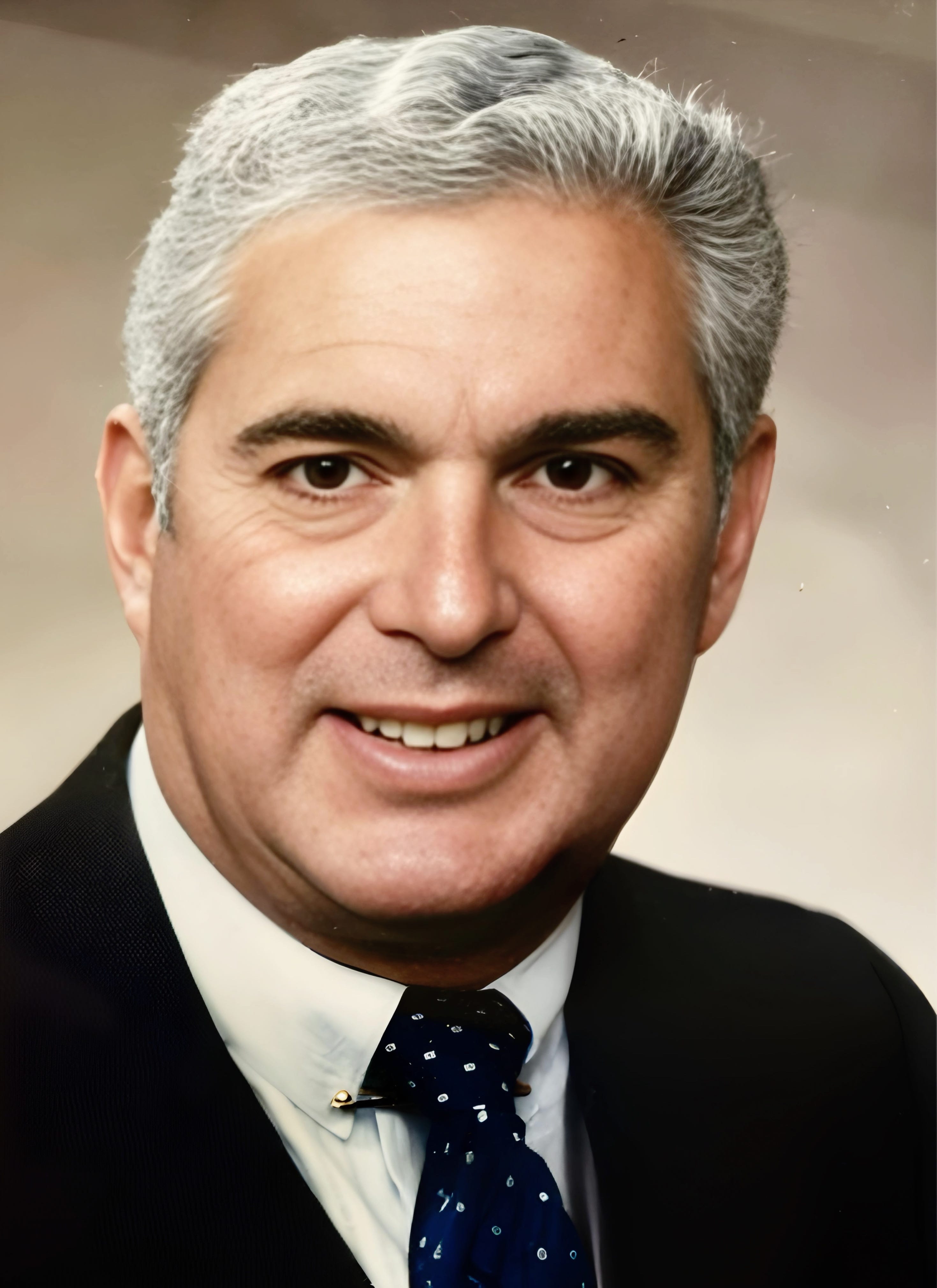
Dr. James Ogsbury is a retired neurosurgeon who lives with his wife Kathy in Denver, Colorado. A graduate of the Cornell University Medical College, who completed his training at the University of Colorado Health Sciences Center, his career in medicine spanned more than 50 years. Originally from New York, he had a brief career in pop music before pursuing medicine, and falling into neurosurgery by simply walking through the wrong door. In addition to private practice, he also was the Director of Surgery at the Lutheran Hospital in the Denver area. His career included the development of a computer-based spine treatment program called the Colorado Low Back Collaborative, and being a physician consultant for two major insurance companies. He still lives in Denver with his wife and enjoys classical music, as well as skiing and biking. “About Not Losing” is his debut memoir about a fractious high-stakes malpractice trial in which he was a defendant in 1989 and 1990.
 | A guest post by
|
Wade
thanks for your comment
Having worked in three systems (military medical system, regular healthcare, and Colorado work compensation healthcare) and spending at least 20 or more years comparing the three, I have come to the sad realization that there really are significant answers to our healthcare crisis in terms of reasonable structural changes. The problem is that the current system is so entrenched that no one seems to wish to even look at them. Oh well, some day – – –
Jay O
Jay, thanks for sharing this deeply personal perspective, on a topic of importance for all. The Health Care System as it exists today needs substantial restructuring. You sharing this legacy is an important contribution to the broad systemic changes that are needed not only in health care, but in law, insurance and more, and even the way we look at these facets of human society.